DESIGNED • ADAPTIVE COMPOSITION PLANNED
Design rationale & research approach
Selecting and composing methods instead of repeating generic instructions
01What led to the skill concept
A specialist title does not establish that an agent knows the best way to perform a particular task. Software development, research and commercial analysis each require combinations of methods, prerequisites and domain knowledge. I want GMA to recognize which techniques apply to a task rather than repeatedly rely on a broad prompt to discover an approach from scratch.
Why multiple layers
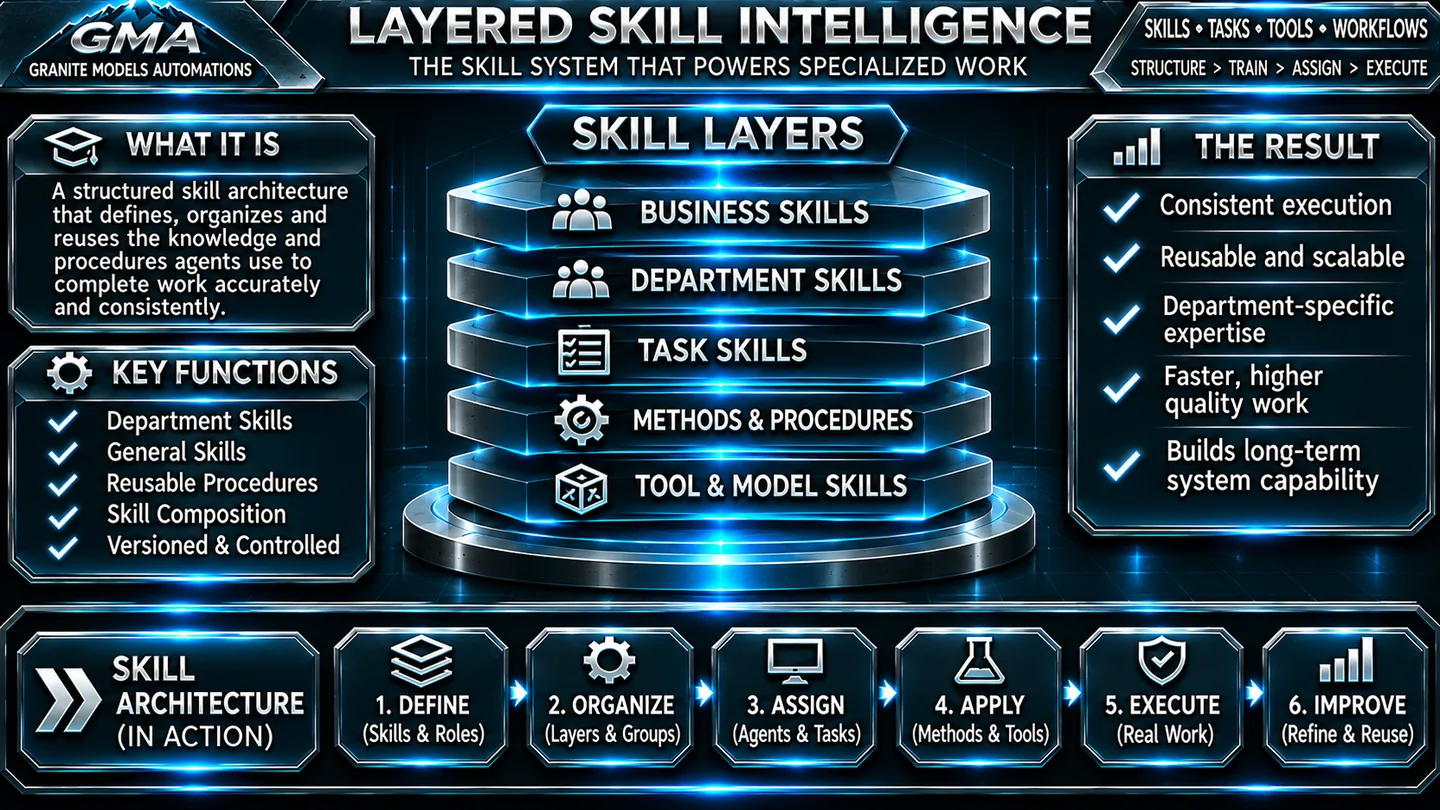
My planned layered skill architecture separates general methods, specialist competencies and task-specific techniques at a conceptual level. The objective is to combine relevant skills without burdening every agent with every procedure. This description is a public research direction, not a disclosure of a final internal skill structure or a claim that adaptive composition is already implemented.
How I intend to research selection
I would compare a fixed skill configuration with an adaptive approach on equivalent tasks. The comparison should consider whether the chosen methods satisfy prerequisites, whether unnecessary techniques are avoided and whether the output is independently acceptable. Where the system lacks a suitable method, targeted research could investigate the deficiency rather than simply select a larger model.
How it fits into the wider system
S³ could supply verified context about the applicability and limitations of methods. The specialist workforce would provide relevant expertise, and the execution architecture would make it possible to evaluate the resulting work. NeuroForge could investigate emerging techniques that might improve future competencies. The goal is a reusable body of knowledge about which approaches work under which conditions, not a second knowledge system.
Conceptual process / not implementation detail
From start to finish
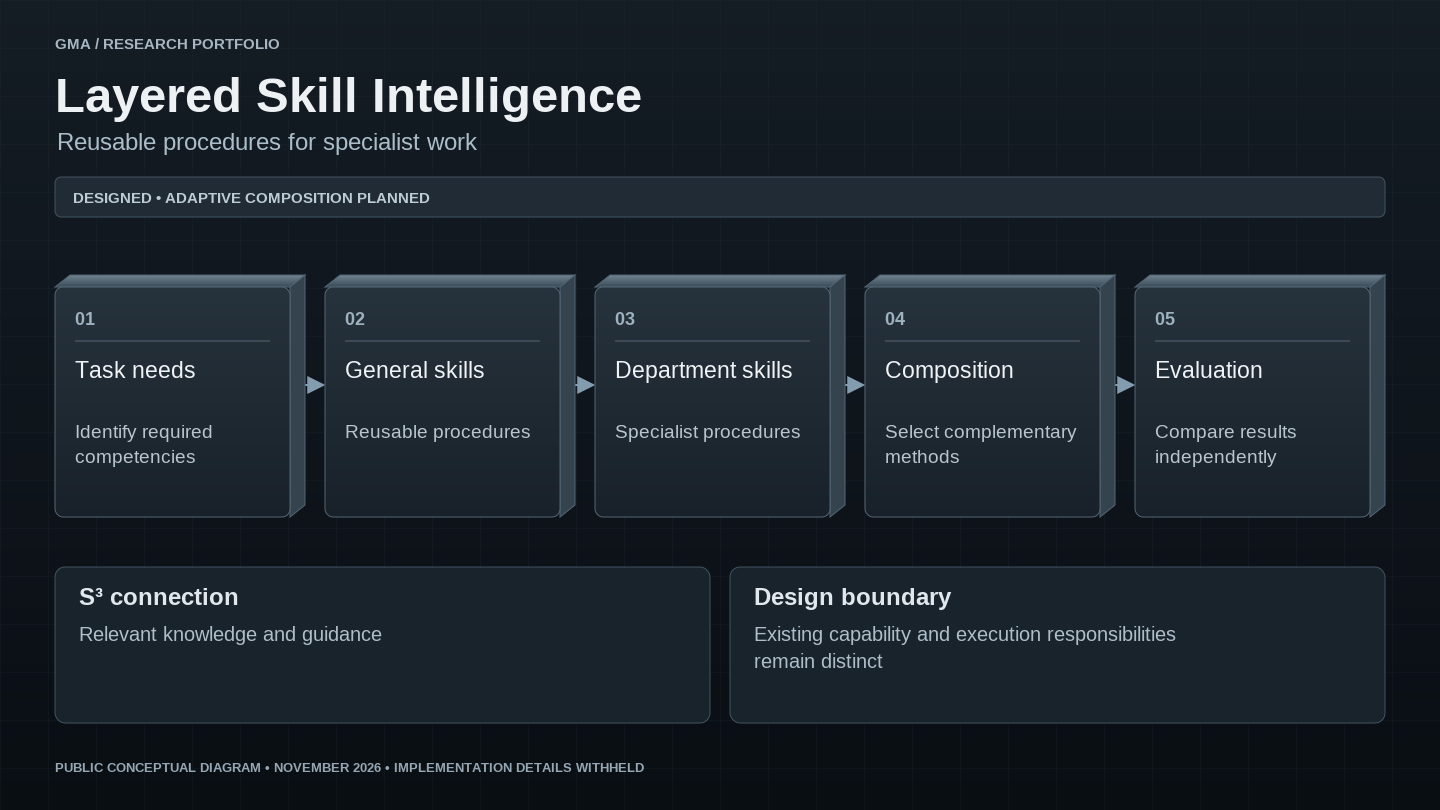
- Task needsIdentify required competencies
- General skillsReusable procedures
- Department skillsSpecialist procedures
- CompositionSelect complementary methods
- EvaluationCompare results independently
Research connections
How this connects to the wider work
Explore the related research areas and the responsibilities they address.