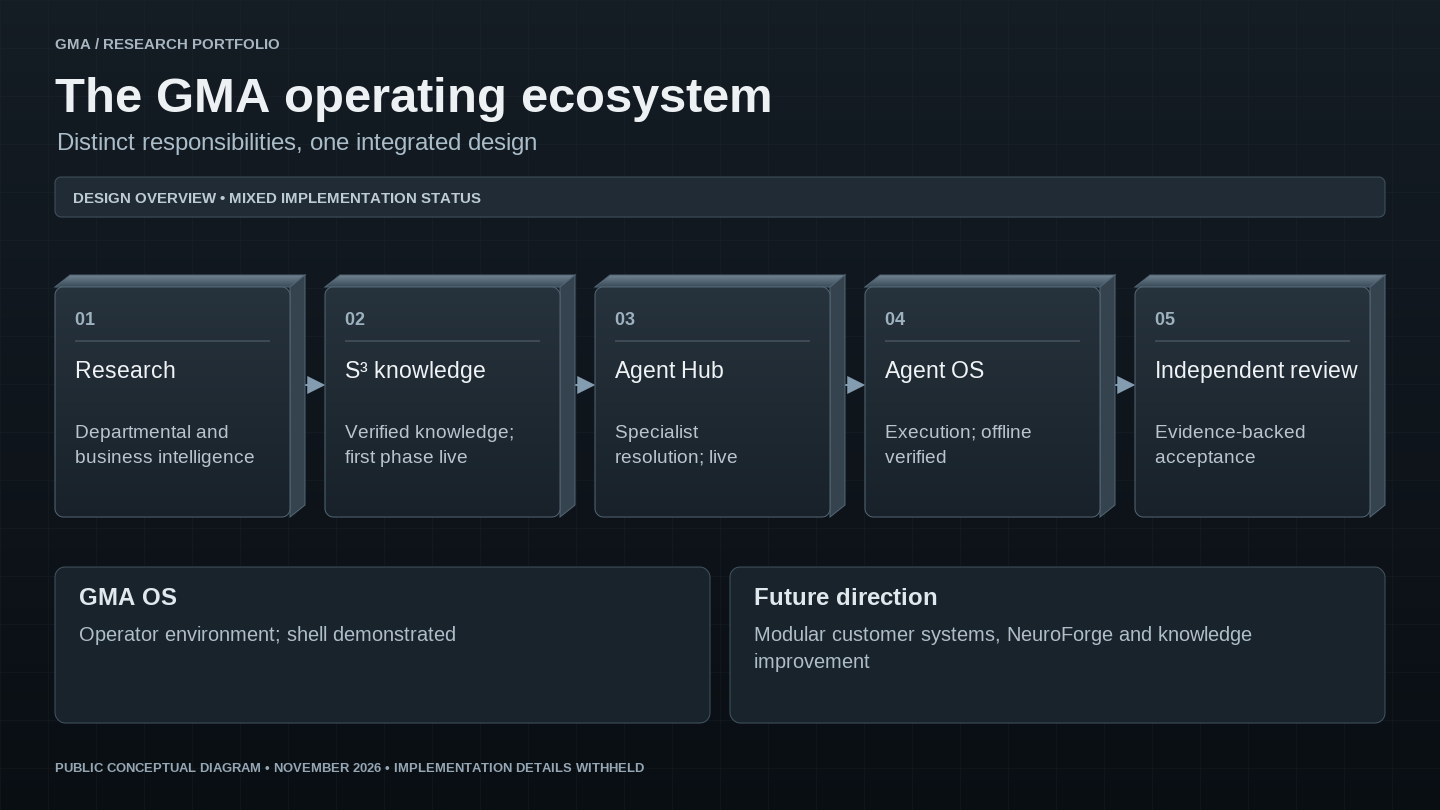
DESIGN OVERVIEW • MIXED IMPLEMENTATION STATUS
Design rationale & research approach
From a practical problem to an integrated intelligence platform
01Where the work began
My background in the field shapes the way I approach automation. A business is a collection of connected responsibilities: understanding customer needs, planning work, managing information, producing useful results and making sure those results are correct. A chatbot can assist with individual questions, but it does not automatically provide the continuity or accountability that those responsibilities require.
Why I chose a systems architecture
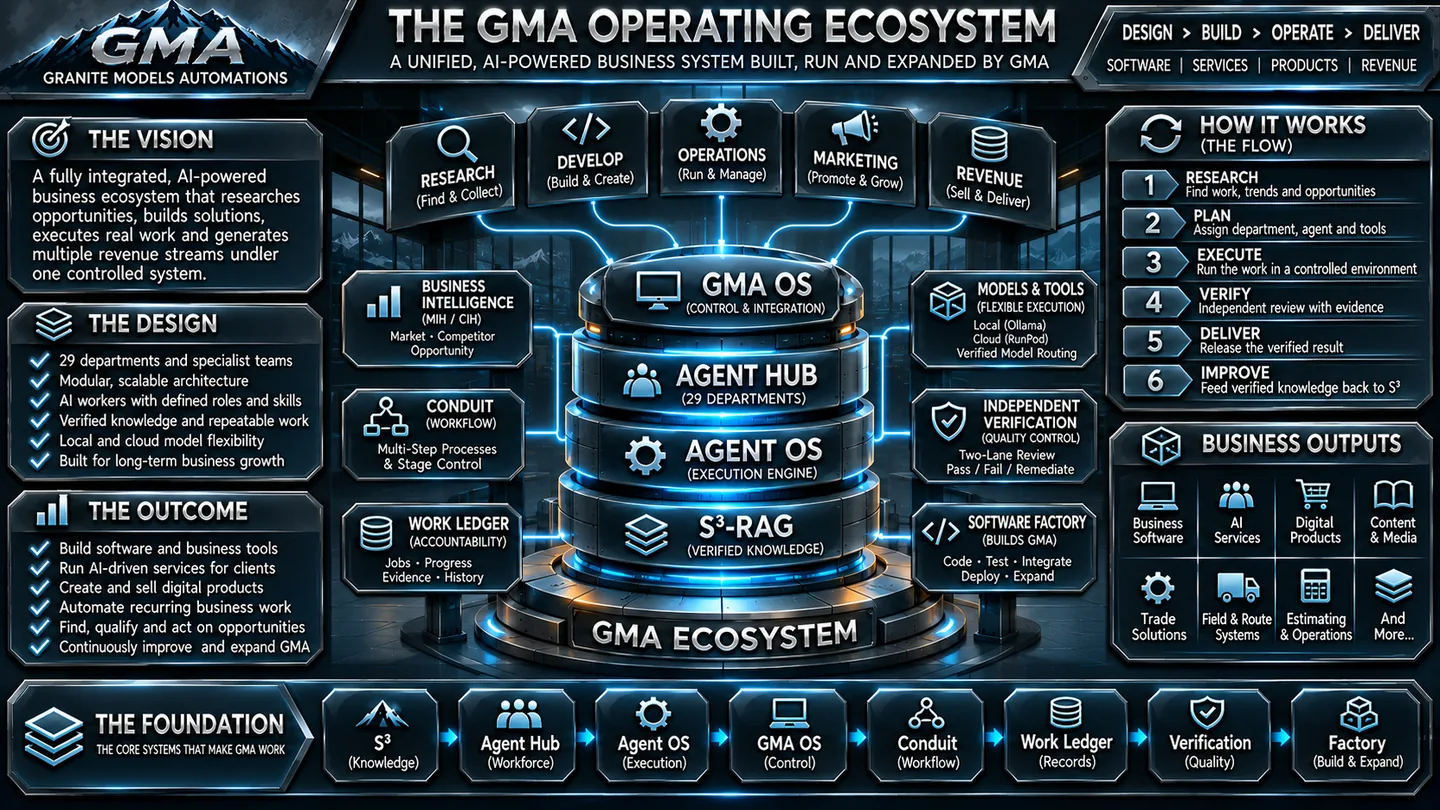
Instead of trying to make one model responsible for everything, I designed GMA around distinct responsibilities. Knowledge, specialist expertise, decision support, work execution and evaluation solve different problems. Keeping them separate allows me to improve one part without redesigning the whole business. The trade-off is that integration must be deliberate: each component needs a clearly understood purpose and a consistent way to work with the others.
How I research and develop the architecture
My approach is to start with the outcome the business needs, identify the engineering problem, examine available AI techniques and open-source technologies, and decide which approaches fit the constraints. Where existing approaches do not meet the intended requirements, I develop a design concept. AI-assisted implementation is then used to turn the design into software, with independent assessment of whether it meets the intended behavior. This describes my engineering approach, not a claim that every component has already passed a complete operational evaluation.
Where I intend to take it
The long-term objective is a business intelligence platform capable of operating specialized departments, improving its knowledge, selecting appropriate skills and computing resources, and eventually producing modular automation systems for other businesses. A business-specialized neural mixture-of-experts model is a future research ambition. The present architecture is an application-level system of specialist agents, not a claim that I have already trained such a model. My intended customer products would include a relevant knowledge foundation and local AI capability, so they can become more useful to the business over time.
The system hierarchy
GMA OS is the operator environment; its shell has been demonstrated. Jarvis is a planned interface. Agent Hub owns specialist resolution, Agent OS owns governed work execution and the Work Ledger records the lifecycle. Independent verification accepts results. S³ supplies verified knowledge. The existing Software Factory is a separate in-house development system. NeuroForge, modular customer systems and automated knowledge improvement remain future directions.
Conceptual process / not implementation detail
From start to finish
- ResearchDepartmental and business intelligence
- S³ knowledgeVerified knowledge; first phase live
- Agent HubSpecialist resolution; live
- Agent OSExecution; offline verified
- Independent reviewEvidence-backed acceptance
Research connections
How this connects to the wider work
Explore the related research areas and the responsibilities they address.
Long-term architecture / conceptual overview
How the research areas come together
Each area addresses a different engineering problem. Together, they describe the intended progression from information to useful business outcomes, with evaluation informing further research. This is a functional overview, not a deployment map.
NeuroForge investigates potential advances, the in-house factory develops GMA, and resource-aware computing supports the work. Business intelligence helps identify where the capabilities could create practical value.
Explore the research portfolio
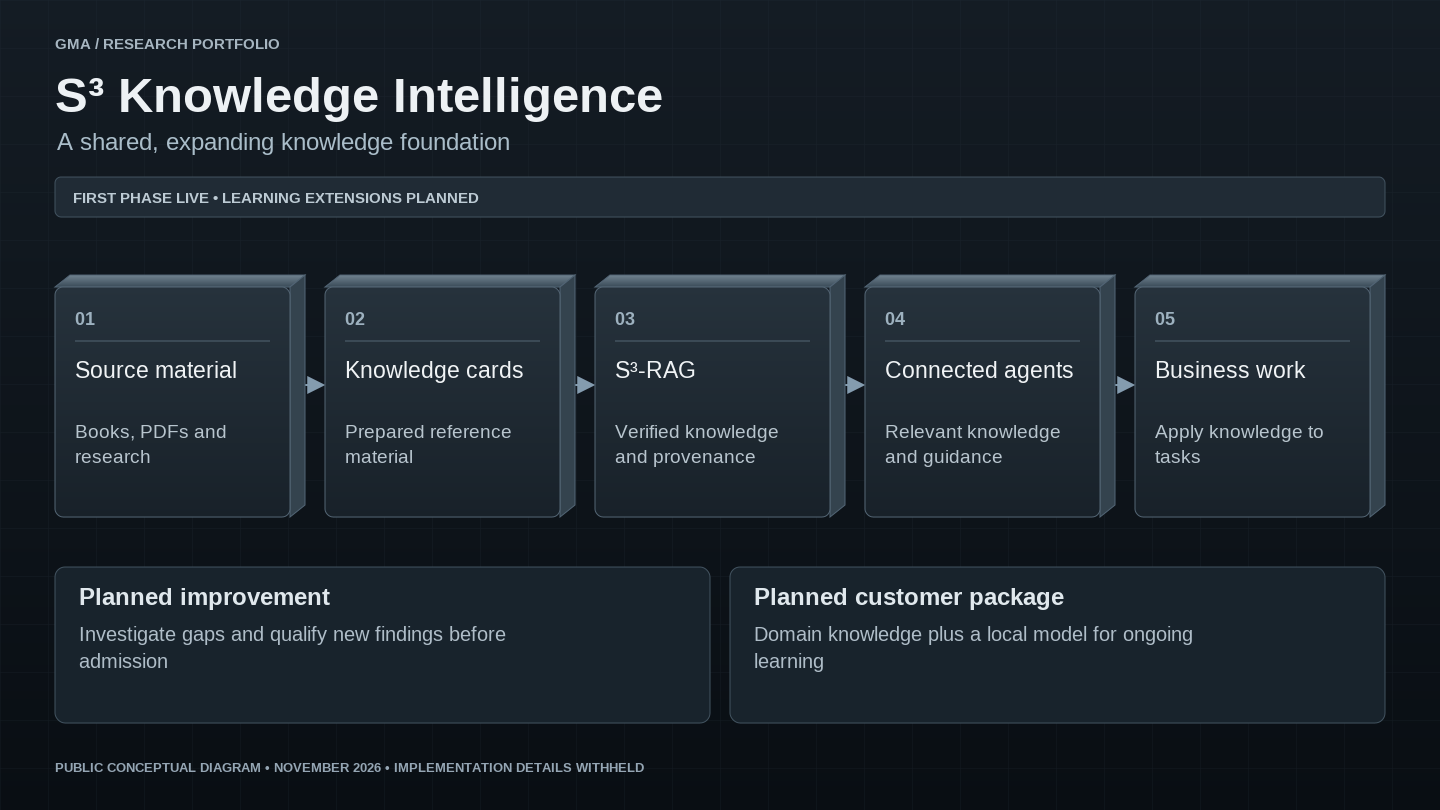
Original architecture / developmentS³ Knowledge
S³-RAG is my original knowledge architecture, designed to help connected AI agents work smarter with reusable, relevant knowledge instead of repeatedly paying to rediscover the same information.
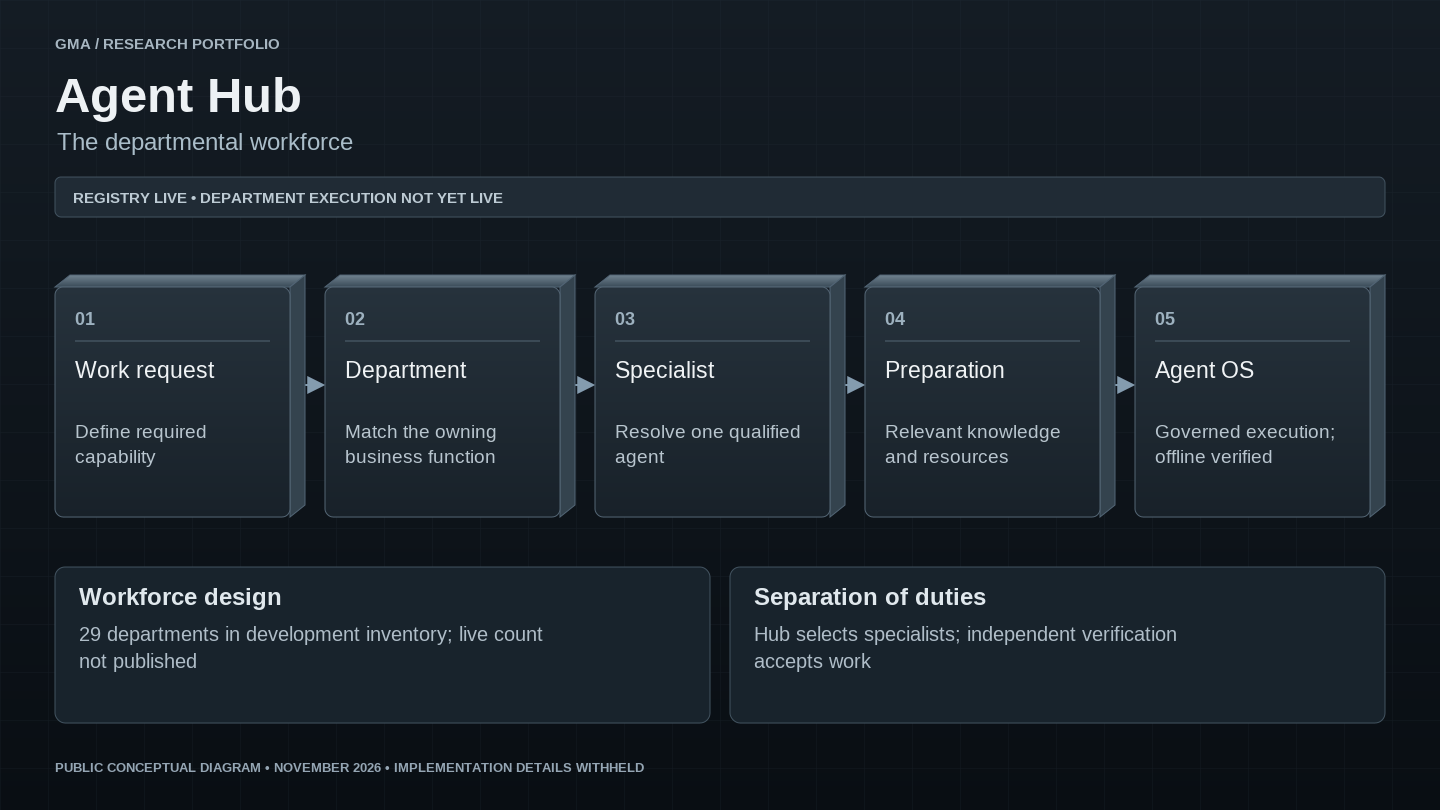
Architecture / implementation workAI Workforce
GMA organizes AI work around specialist departments. Agent Hub is the architectural foundation for matching work to relevant competencies.
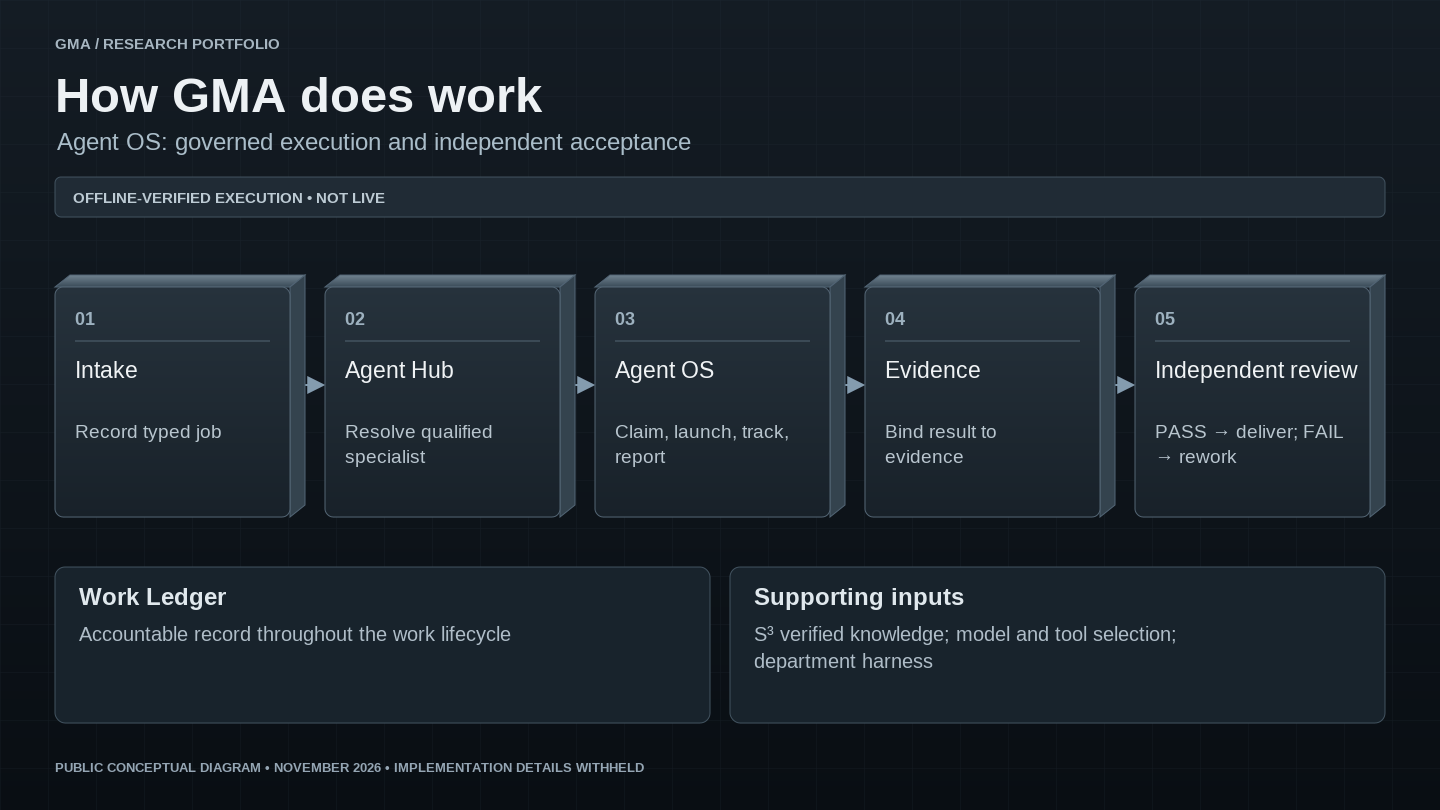
Architecture / implementation workExecution
Agent OS and the Work Ledger represent my approach to managing AI-assisted work as an accountable process, with evidence and independent evaluation.
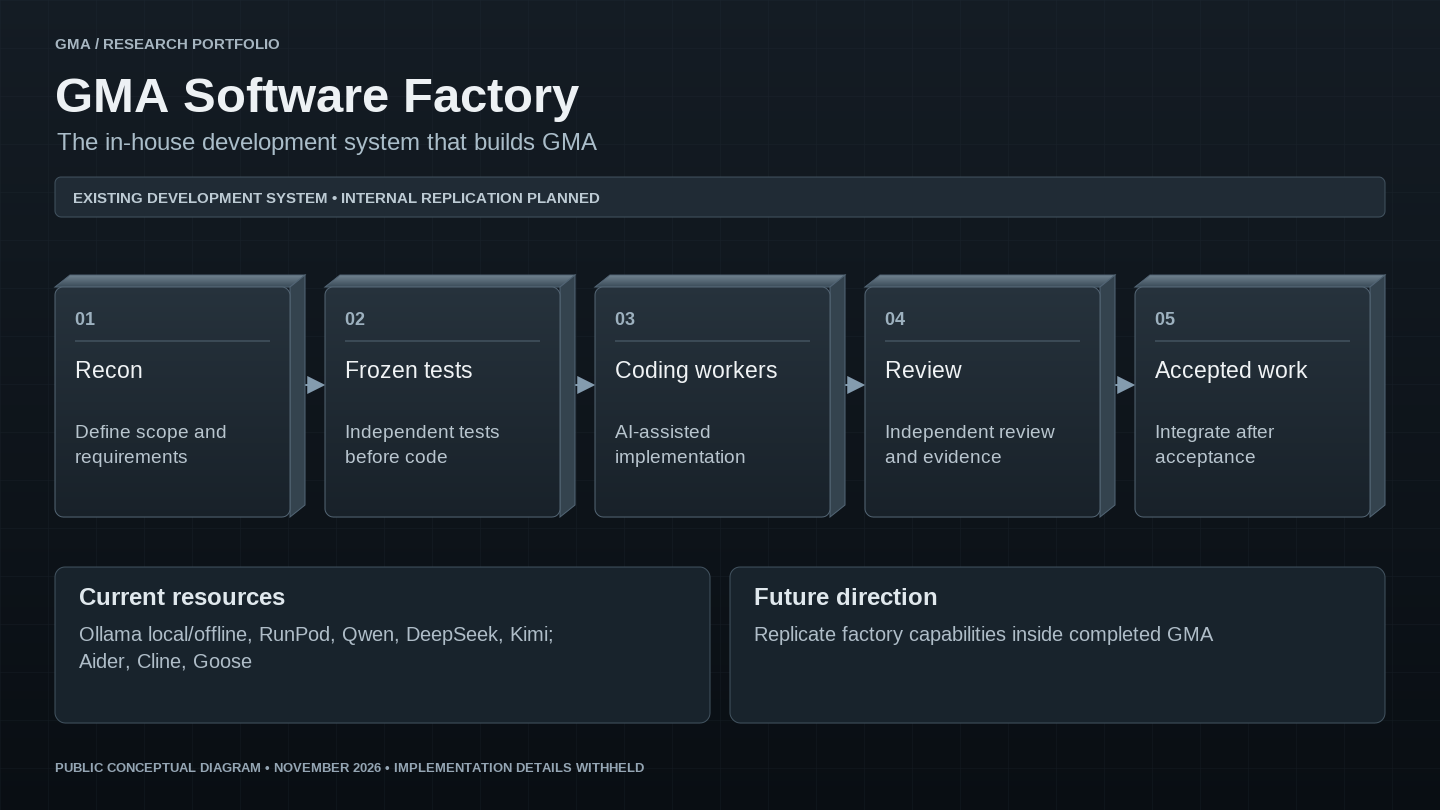
Internal development system / future replication plannedSoftware Factory
I built the software factory as an in-house development system specifically to construct GMA. My next objective is to reproduce its proven capabilities within GMA itself.
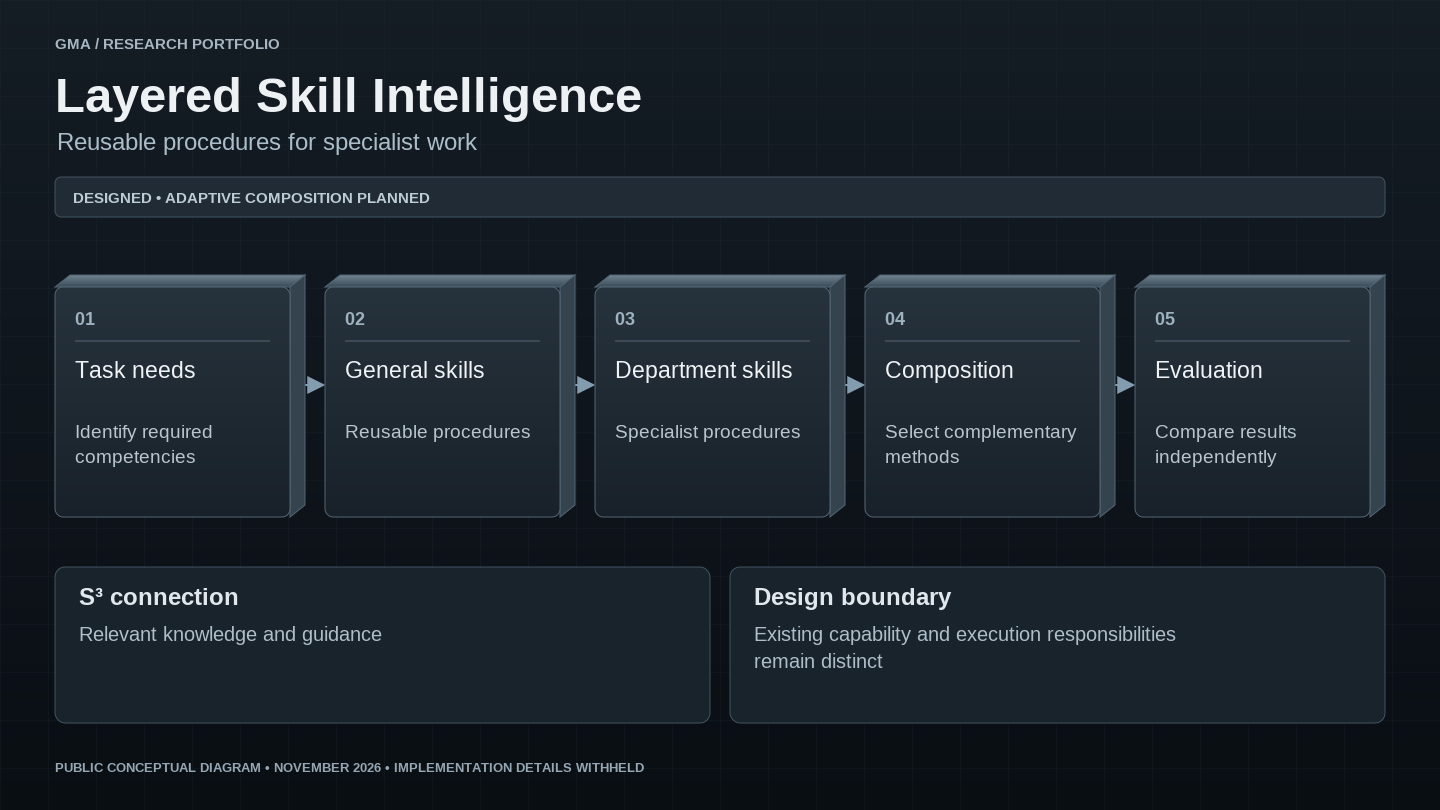
Planned capability / layered skill compositionSkill Intelligence
I plan to introduce layered skill intelligence into GMA so it can select and combine the methods appropriate to each business or software task.
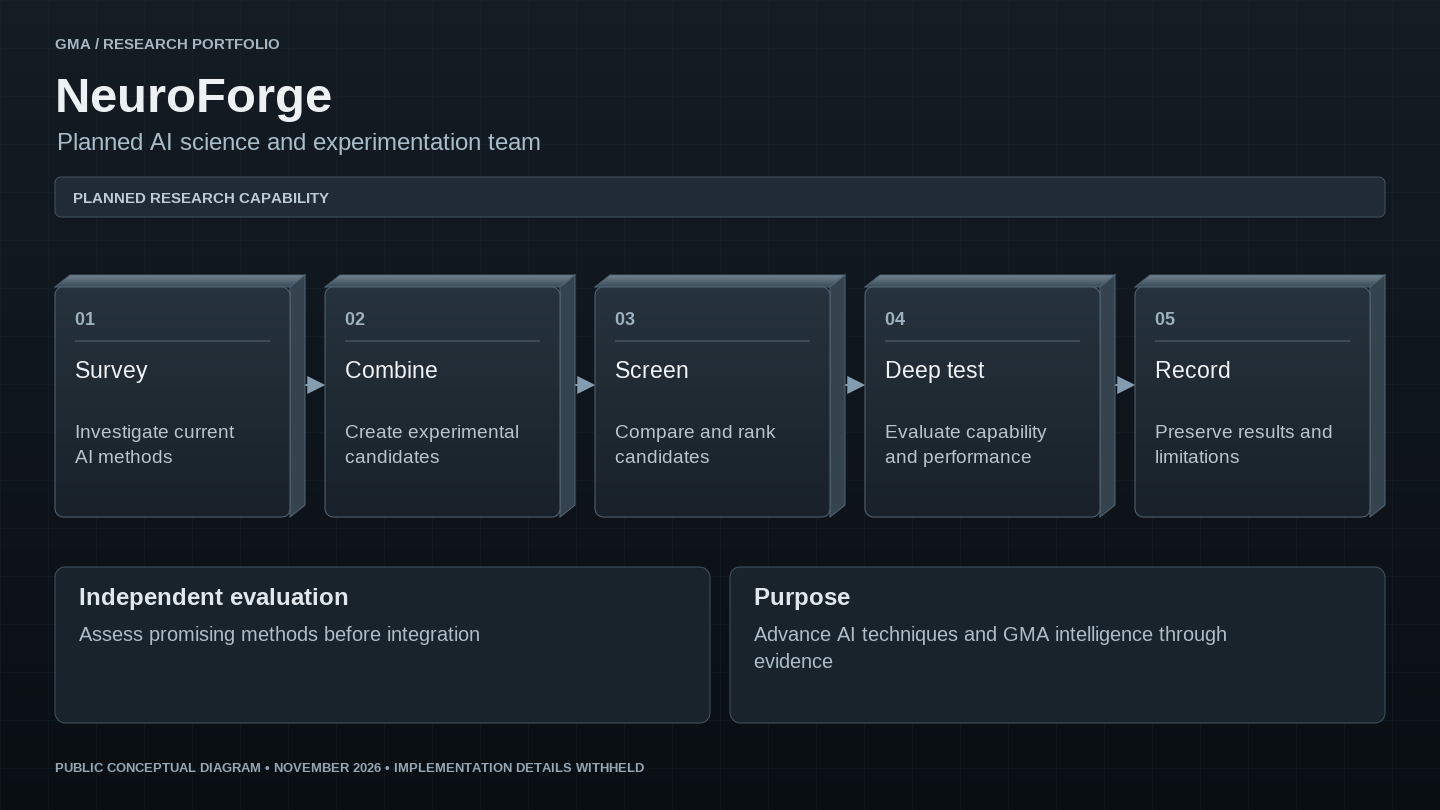
Planned department / AI advancementNeuroForge
NeuroForge is my planned AI scientist team: a dedicated research capability that studies current AI methods, combines promising approaches and evaluates them through progressively more demanding experiments.
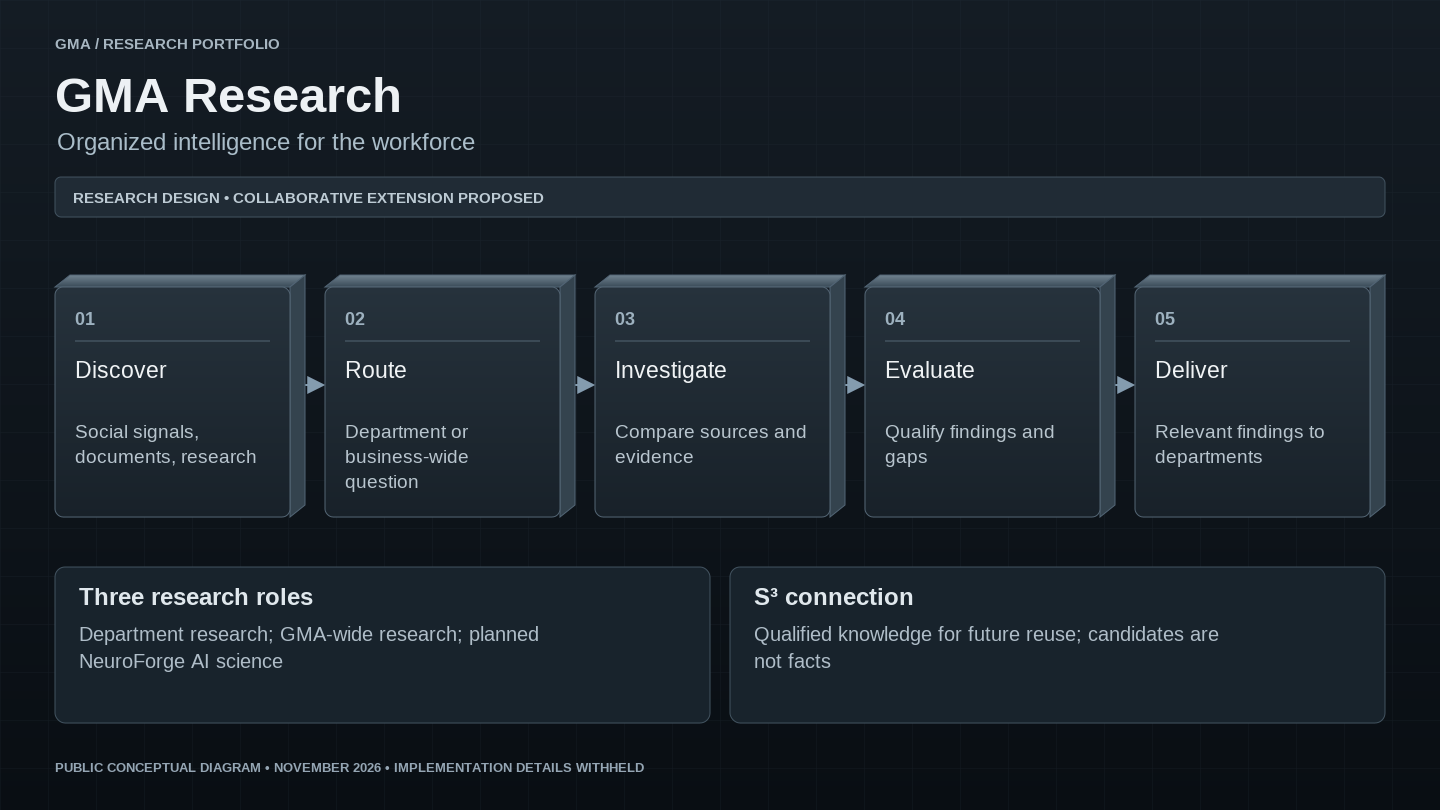
Research direction / collaborative extension proposedResearch
GMA is designed around multiple complementary research responsibilities: departmental investigation, business-wide knowledge maintenance and dedicated AI science through NeuroForge.
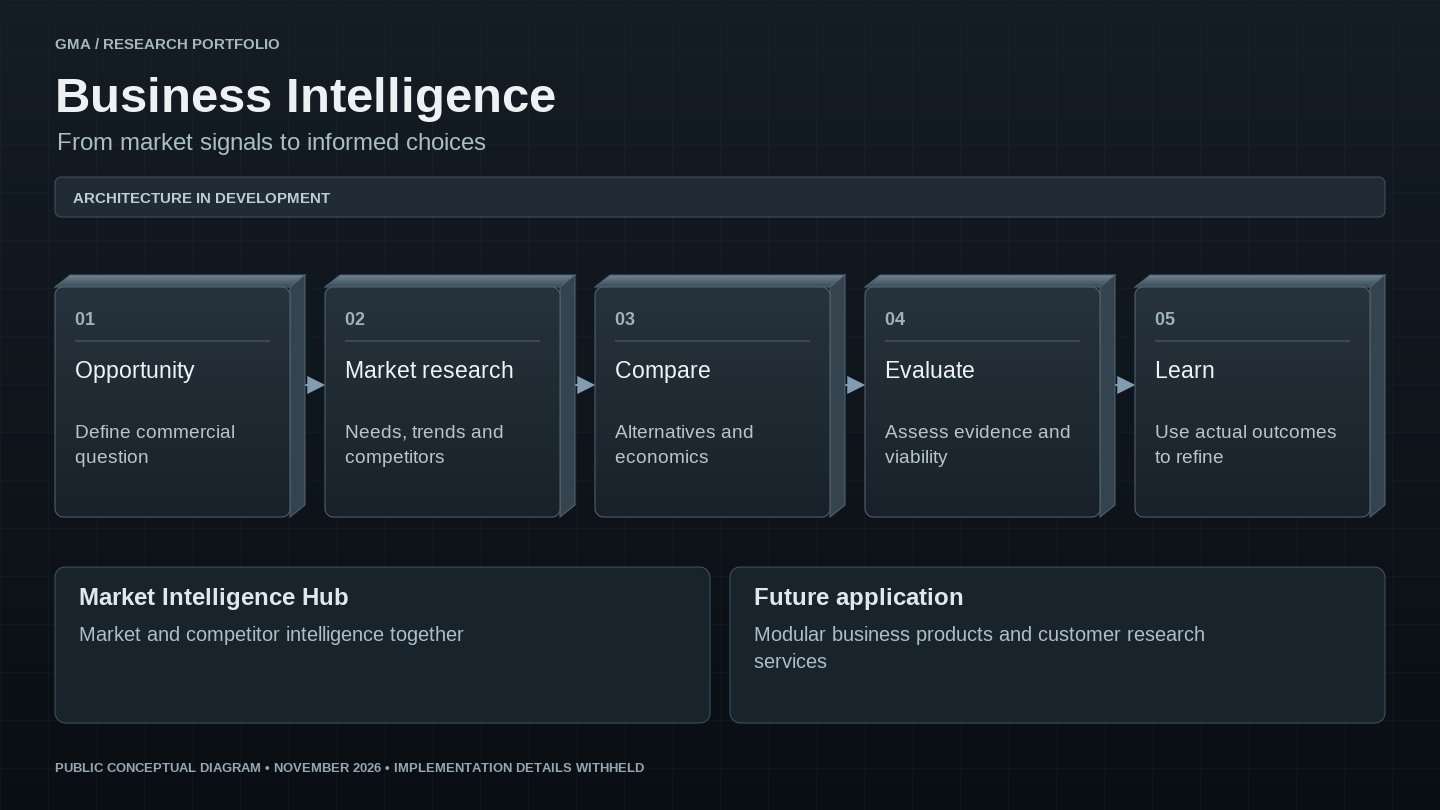
Architecture / developmentBusiness Intelligence
GMA’s business intelligence work focuses on market and competitor information, emerging opportunities and the practical requirements of operating a business.
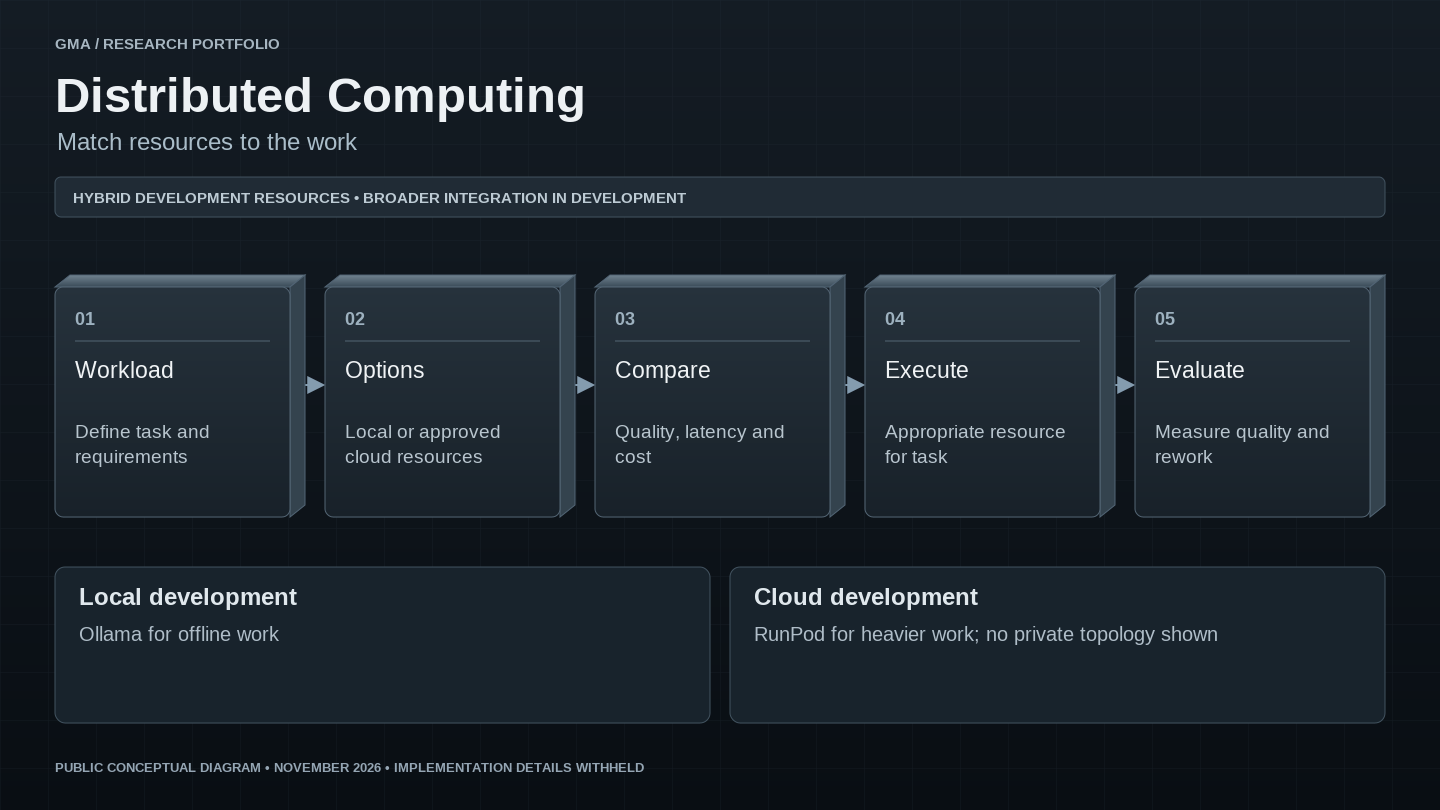
Architecture / developmentComputing
My work explores hybrid local and cloud AI execution as a way to balance capability, responsiveness, cost and data-handling requirements.
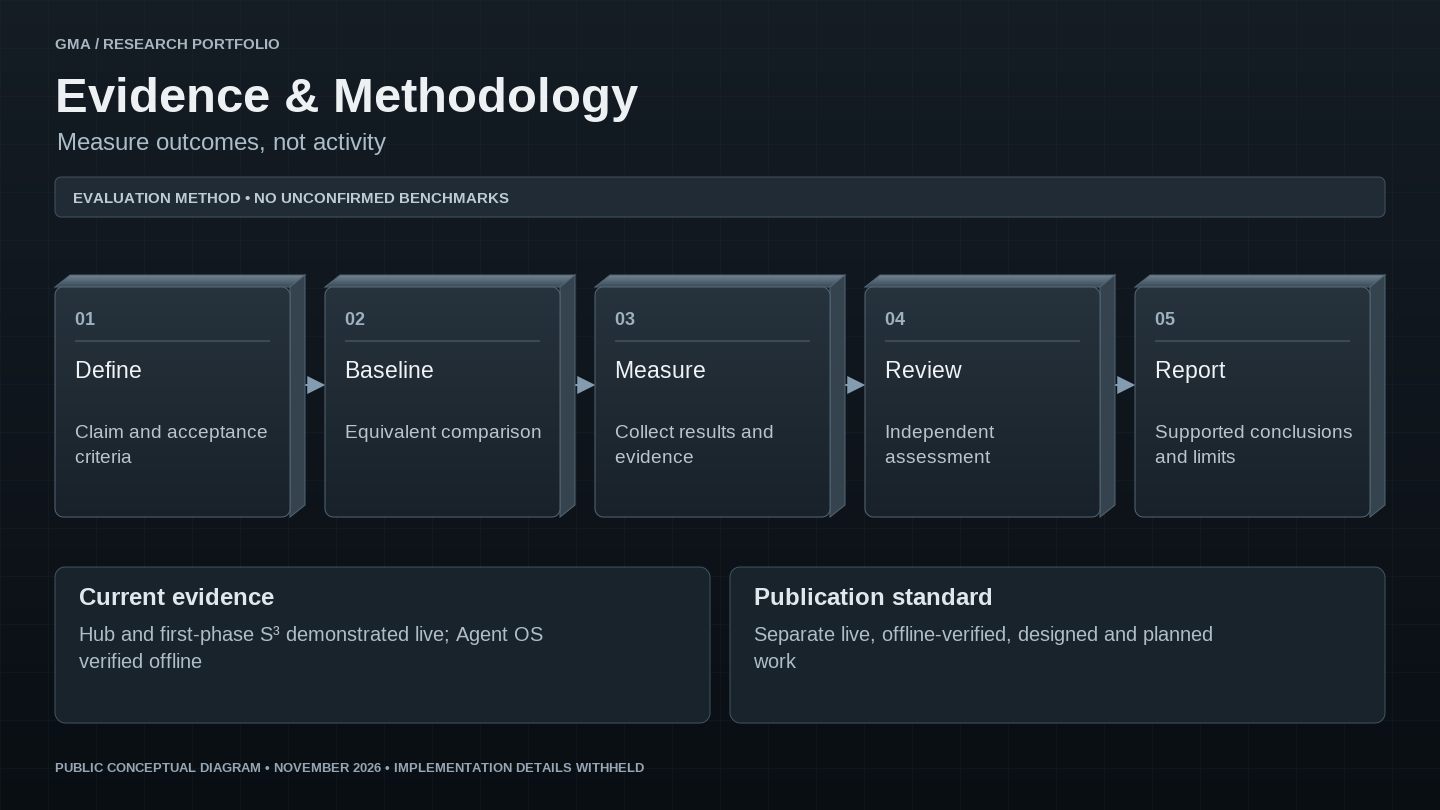
Evidence policy / figures pending approvalEvidence
This portfolio distinguishes architectural design, implementation, verification and operational demonstration. Planned capabilities are not presented as completed work.
Professional profileAbout
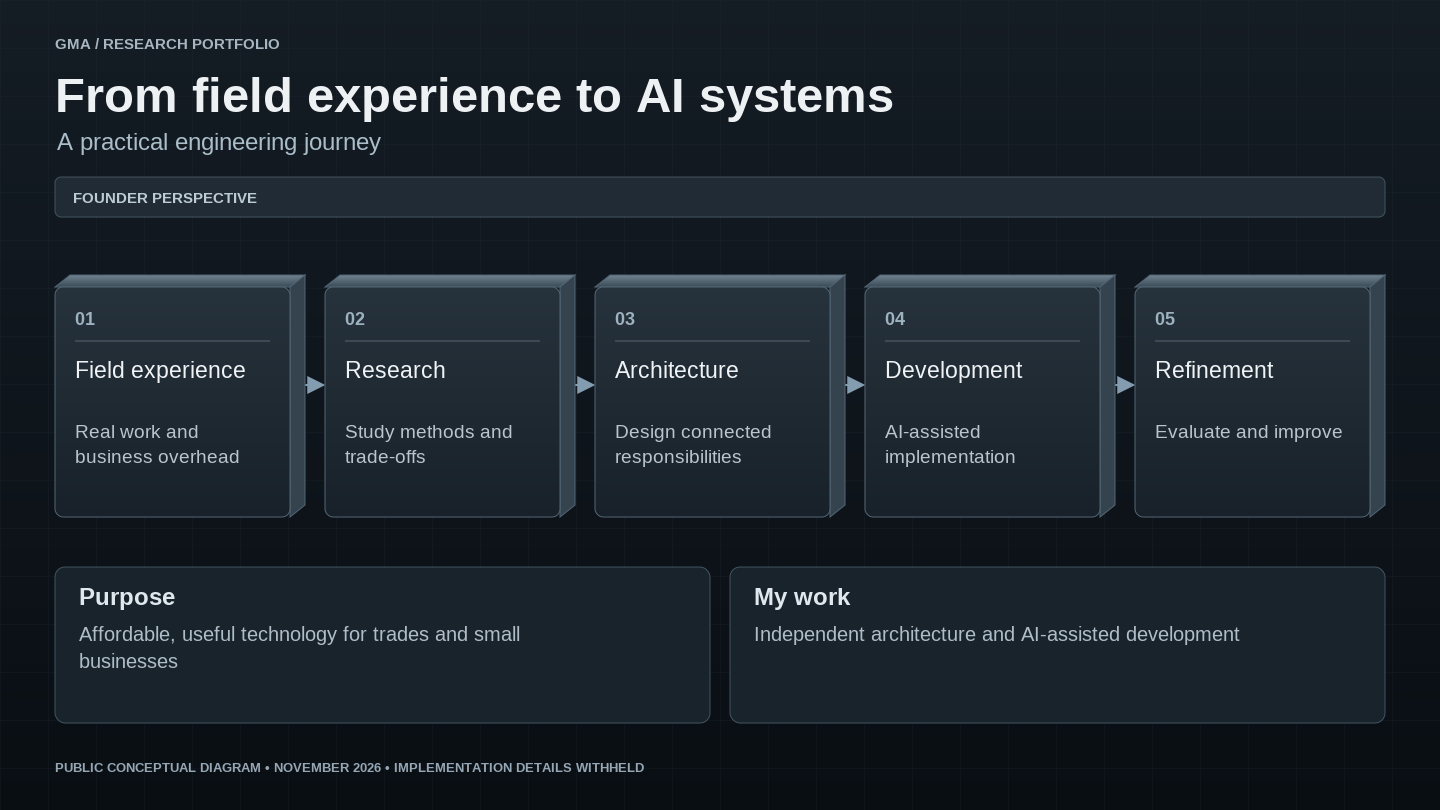
I have spent my working life in the field, owned a few businesses along the way and taught myself about AI because I wanted better tools for the people doing the work.
Available for inquiries / terms subject to agreementFunded R&D
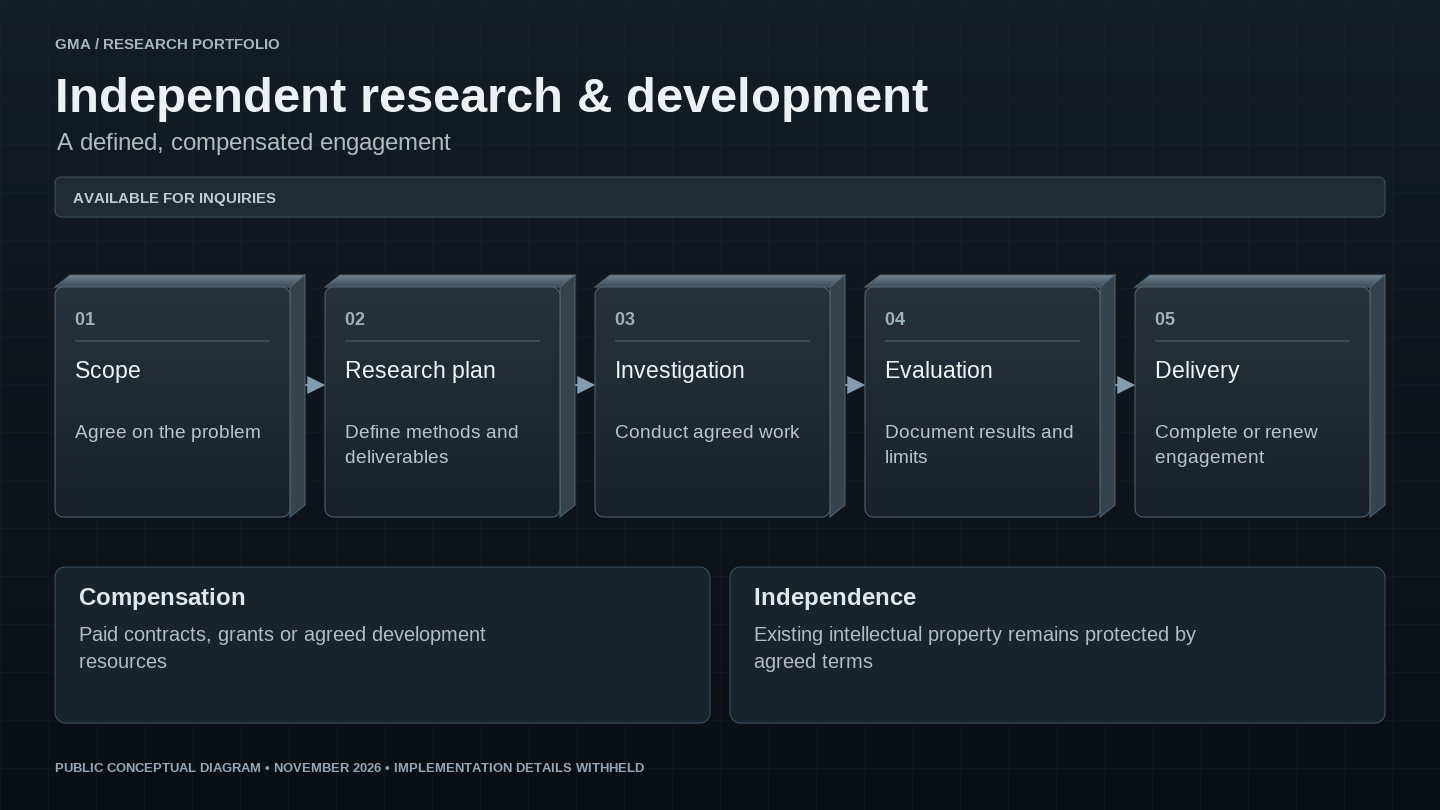
I am open to paid research, technical development and practical engineering assignments for businesses, as well as grants or mutually beneficial agreements that support my independent work.