ARCHITECTURE IN DEVELOPMENT
Design rationale & research approach
Making intelligence useful to a real business
01What led to business intelligence
My experience in the field informs the practical questions I want GMA to address: what customers need, which work is worth pursuing, what it costs to deliver and whether an opportunity is sustainable. A popular topic or an attractive product idea is not necessarily profitable. I want the intelligence system to help distinguish plausible opportunities from evidence of commercial value.
Why market and competitor information belong together
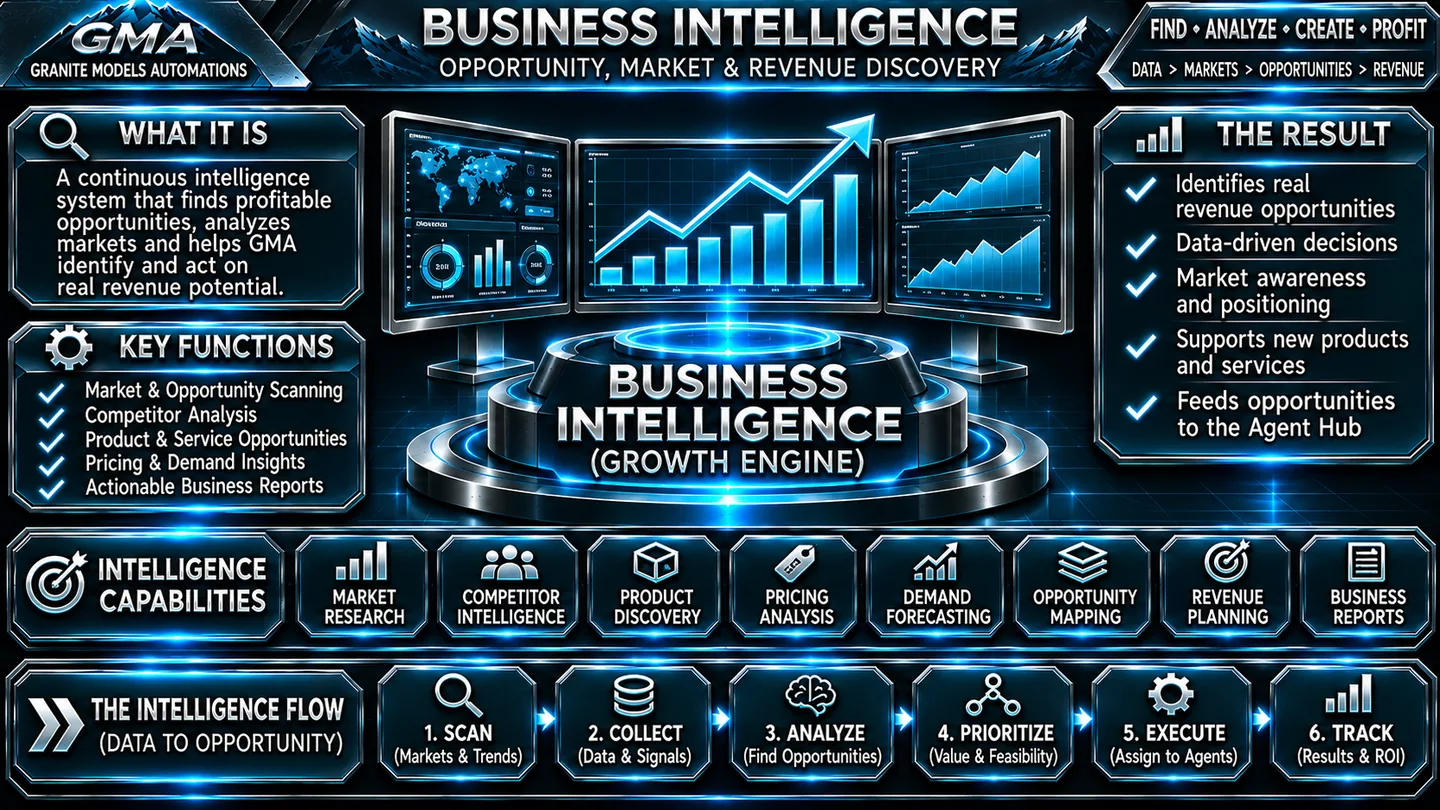
The Market Intelligence Hub encompasses market and competitor research in the existing design. I intend to deepen competitor analysis within that capability rather than duplicate responsibility. Demand, alternative offerings, pricing and the ability to deliver are related considerations. Evaluating them together can provide a stronger basis for a business decision than treating any one signal as decisive.
How I intend to research business opportunities
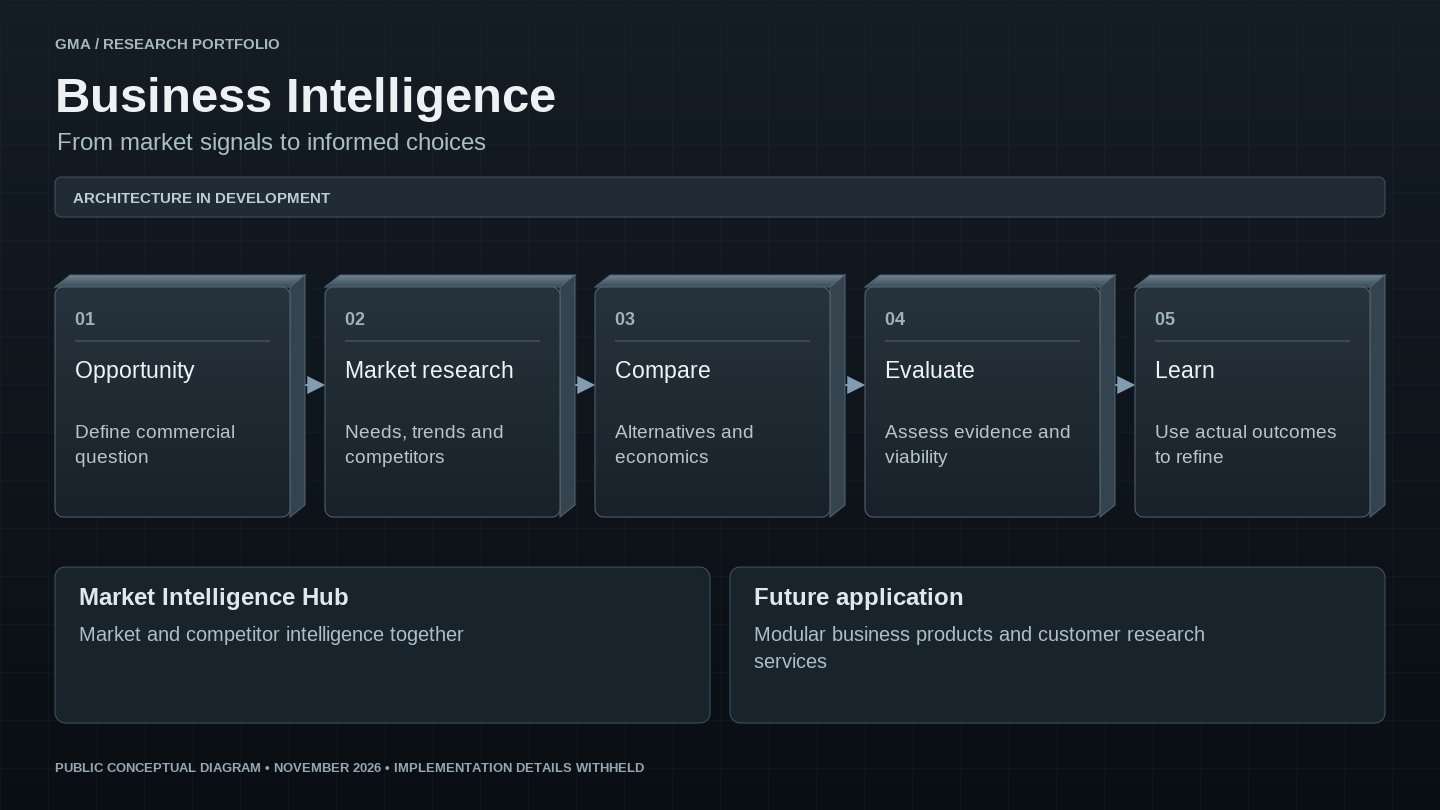
The proposed approach begins with a specific commercial question. Relevant market signals and competitor information are compared with customer needs, operating constraints and the expected economics of delivery. Missing or contradictory information may require targeted investigation. The result should be a qualified assessment, with uncertainty identified, rather than an automatic commitment to spend money or develop a product.
How it becomes a future product capability
Once GMA’s underlying functions are reliable, I intend to assemble smaller business systems from suitable departmental capabilities. A social media business, for example, might need research, content and commercial analysis without the full GMA architecture. A future business research service could also deliver scoped intelligence reports and structured findings. These are planned commercial applications; success would depend on real customer demand, quality and sustainable delivery costs. Each planned package would include relevant domain knowledge and a suitable local model to support ongoing knowledge-assisted learning for that customer.
Conceptual process / not implementation detail
From start to finish
- OpportunityDefine commercial question
- Market researchNeeds, trends and competitors
- CompareAlternatives and economics
- EvaluateAssess evidence and viability
- LearnUse actual outcomes to refine
Research connections
How this connects to the wider work
Explore the related research areas and the responsibilities they address.